History
“It is in your hands, to make a better world for all who live in it.” - Nelson Mandela
At SS Peter & Paul, we are historians — and witnesses to the dignity of every person.
At SS Peter & Paul, we believe history should be memorable, stimulating and exciting. Our enquiry-based curriculum is written for our school and our community. Eighteen units carry our children from changes within their own living memory to Ancient Greece, the Kingdom of Benin and the Second World War, building the secure sense of chronology that many would not otherwise have.
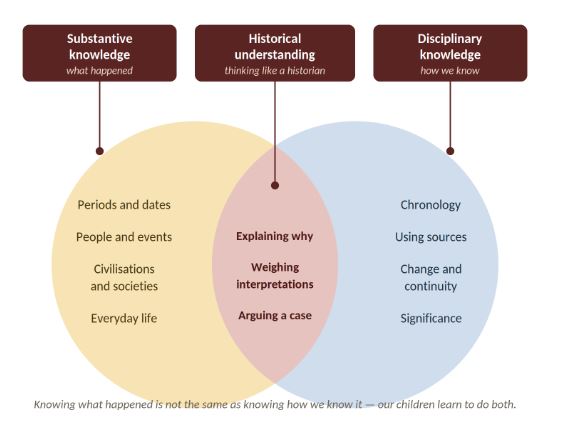
As little historians, our children do not simply learn what happened. They learn to think like historians: handling real artefacts, diaries, photographs and oral histories, asking who made this source, and why, and discovering that historical knowledge is constructed, contested and incomplete.
The curriculum is deliberately rooted in Merton — Wimbledon and the beginnings of tennis, the Surrey Iron Railway, and William Morris’s workshop at Merton Abbey Mills — so that our children see their own streets as part of the national story. It is our aim that children see themselves and their communities represented in what they study, and so we teach great civilisations beyond Europe alongside the history of Britain.
As a Catholic school, we ask our children to reflect on justice, leadership, compassion and service. Our Year 6 children leave SS Peter & Paul able to weigh evidence and argue a case about the hardest questions of the past, with a clear understanding of the periods that shaped the society we live in today — and carrying the commitment that follows from studying the Holocaust: Never Again.
Our curriculum is designed to ensure
- secure chronological knowledge that becomes broader and more detailed each year
- a range of ways to enquire and communicate, from handling artefacts in Year 1 to formal debate in Year 6
- a deeper understanding of concepts, issues and abstract ideas
- confident use of history’s second-order concepts — change and continuity, cause and consequence, similarity and difference, evidence and interpretation, and historical significance
- growing independence, so that pupils frame their own historically valid questions, make links across periods and write their own structured accounts
Pupils are assessed through a range of formative strategies: low-stakes retrieval at the start of every lesson, hinge questions that check understanding before teaching moves on, work in books, and pupil voice. Each unit culminates in a written historical outcome, where children apply what they have learned and, from Year 4 upwards, reach a judgement and justify it with evidence. Teachers make one judgement per child per unit against published criteria, recorded on our whole-school history tracker. Because that tracker flags disadvantaged pupils, pupils with SEND and pupils learning English as an additional language, any emerging gap is seen and acted upon. Subject leadership monitors planning, books, lessons and pupil voice each term. This responsive approach means our children know more, remember more and can do more — developing into confident, curious historians who understand how the past has shaped the world they live in.
- SSPP History Approach
- SSPP History Knowledge and Skills Progression
- SSPP History Language Continuum
- SSPP History Long Term Plan
- SSPP History Threshold Concepts